Quick Search
- Looking for Information About a Particular Rare Disease?
- Common Challenges of Living with a Rare Disease
- Personal Stories Shared Recently
- Rare Diseases Impact Every Facet of a Person’s Life
- Case Study Videos: Rare Disease and Mental Health and Wellbeing Impacts
- Individual Advocacy Resources That May Be Helpful
- References
A disease is a condition with a specific pattern of clinical signs, symptoms, and findings, and is considered rare if it affects fewer than, or equal to, 5 in 10,000 people.1,2 Approximately 8% of Australians live with a rare disease. Extrapolated to an Australian population of over 27 million people, this equates to over 2 million Australians.3
There are at least 7,000 known rare diseases, and new diseases are being discovered regularly. Eighty per cent of rare diseases are of genetic origin.1,4 Types of non-genetic rare diseases include ‘rare cancers, rare infectious diseases, rare poisonings, rare immune-related diseases, rare idiopathic diseases and rare undetermined conditions’.2
A disease may be considered rare in one region of the world but not in another. Current knowledge and data of rare diseases in Australia are too limited to make these distinctions.
Looking for Information About a Particular Rare Disease?
The Rare Awareness Rare Education (RARE) Portal is Australia’s growing national resource for rare diseases, housing an online library of current, reliable and straightforward rare disease information. Search the Rare Disease Directory. If you are unable to find a particular rare disease on the RARE Portal, more information, resources, and individual rare disease pages will continue to be added to the site over time.
Common Challenges of Living with a Rare Disease
People living with rare disease face common challenges, including difficulty obtaining an accurate diagnosis, lack of treatment options and inadequate, fragmented care.1,4
As the national peak body for Australians living with a rare disease, Rare Voices Australia (RVA) publishes one new personal story each month. In their own words, people with lived experience share what it’s like to live with a rare disease.
Personal Stories Shared Recently


Rare Diseases Impact Every Facet of a Person’s Life
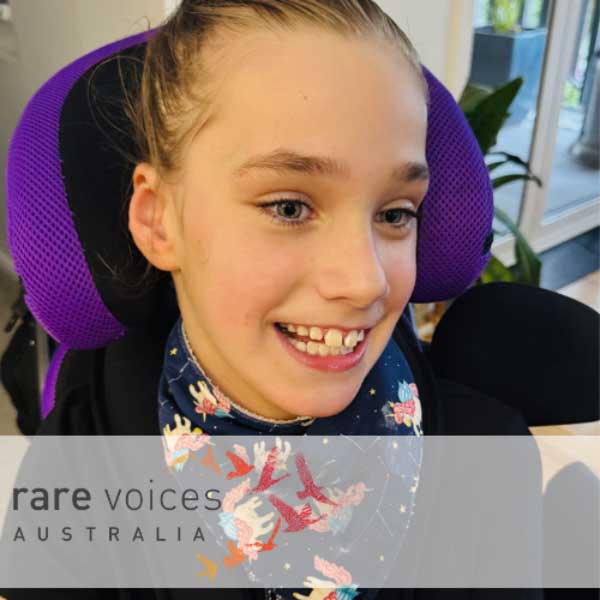
Rare diseases, like many other chronic diseases, are often serious and progressive. They typically display a high level of symptom complexity and thus are a significant cause of ongoing health and psycho-social challenges. It has been reported that fewer than 5% of rare diseases have an effective treatment.5 Improving quality of life and extending life expectancy of people living with a rare disease relies on appropriate treatment and care.1
Case Study Videos: Rare Disease and Mental Health and Wellbeing Impacts
Maria, Elijah and Angela’s stories highlight that for people living with a rare condition, challenges to mental health and wellbeing may surface at any time. Such challenges may also impact those caring for people with a rare or undiagnosed rare condition.
Case Study: Maria
Case Study: Elijah
Case Study: Angela
Individual Advocacy Resources That May Be Helpful
- RARE Help
- Rare Disease Disability Toolkit
- Mental Health and Wellbeing Support for Australians living with a rare disease
- Supporting the Mental Health of Australians living with a rare disease – for health professionals
- Facilitating a Rare Disease Diagnosis and Supporting Undiagnosed Patients – for health professionals
- Aboriginal and Torres Strait Islander People Resource Collection
- Culturally and Linguistically Diverse Community Resource Collection
- Regional, Rural and Remote Community Resource Collection
References
- Australian Government. Department of Health. National Strategic Action Plan for Rare Diseases. Canberra; 2020. 63 p. Available From: https://www.health.gov.au/sites/default/files/documents/2020/03/national-strategic-action-plan-for-rare-diseases.pdf
- Wang CM, Whiting AH, Rath A, et al. Operational description of rare diseases: a reference to improve the recognition and visibility of rare diseases. Orphanet. J. Rare Dis. 2024; 19:334. https://doi.org/10.1186/s13023-024-03322-7
- Australian Bureau of Statistics. National, state and territory population: Statistics about the population and components of change (births, deaths, migration) for Australia and its states and territories (reference period: March 2024) [Internet]. Accessed on 22 October 2024. Available from: https://www.abs.gov.au/ausstats/abs@.nsf/mf/3101.0
- Commonwealth of Australia. Department of Health and Aged Care. What we’re doing about rare diseases. Accessed 18 May 2023. https://www.health.gov.au/topics/chronic-conditions/what-were-doing-about-chronic-conditions/what-were-doing-about-rare-diseases
- Orphanet. About Rare Diseases. Accessed 18 May 2023. https://www.orpha.net/consor/cgi-bin/Education_AboutRareDiseases.php?lng=EN
- Kaufmann P, Pariser AR, Austin C. From scientific discovery to treatments for rare diseases – the view from the National Center for Advancing Translational Sciences – Office of Rare Diseases Research. Orphanet J. Rare Dis. [Internet]. 2018;13(1):196. Available from: https://doi.org/10.1186/s13023-018-0936-x