I started working in England as a lawyer before migrating to Australia in 2002. After arriving in Australia, I decided to change careers and study social work and mental health. I started my own private practice and began taking up teaching roles at multiple universities across Australia. Life was good for our family.
Everything changed in 2019 when my children and I were diagnosed with Mitochondrial Disease (mito), a rare degenerative and incurable condition. We were forced to find a new way to live with this knowledge, and I started noticing my body changing. Despite believing myself to be empathetic to others’ situations, I had no idea how challenging life can be when things change, illness sets in, and the research is virtually non-existent, which means the degenerative disease you’re living with will not be ‘cured’ during your lifetime.
Eventually, after years of ill health, I had no choice but to make the difficult decision to retire at the age of 51. I found this transition very difficult and wanted to understand what was happening to my children and me. Soon, I decided to start a part-time PhD at Charles Sturt University exploring the experiences of individuals in families where there are two or more members with a life-limiting or chronic condition. This gave me a sense of purpose and something to aim for. Importantly, I knew my work also had the potential to assist other members of the not-so-small mito community. At the time of writing in July 2025, I’ve completed the data collection component of my PhD and am writing up my findings.
As someone who identifies as living with a disability, I am a vocal advocate for disability rights and will accept any opportunity to share information and knowledge. As a person with both hidden and visible disabilities, I feel strongly about advocating for myself and others to drive systemic change.
Receiving a diagnosis at the same time as all my children was a significant moment and finding virtually no support was devastating. I feel passionate about supporting all people, including those living with ‘differences’. I am very keen to share our stories in the hope of reducing stigma, increasing understanding, and changing the way we (society) currently do things.
Despite living with mito, life is good again for my family and me.
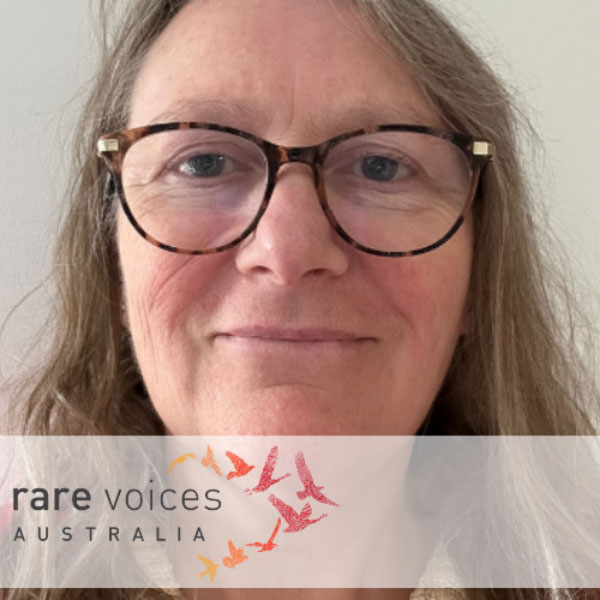
Diane is one of our 2025-27 RVA Ambassadors.